

The Role of Property Management in Long-Term Investment Success
October 13, 2026
Learn why professional property management is essential for maintaining property value, reducing risks, and achieving long-term investment goals.

Crighton Properties | September 26, 2024
Are you thinking about moving to the beautiful Cayman Islands? With its stunning beaches, clear waters, and lively atmosphere, it's no surprise that many people dream of living in this Caribbean paradise. This guide covers exactly what to expect on immigration, housing, cost of living, healthcare, education, banking, and logistics with real figures, not just generalities.
Yes, in most cases. Non-residents must hold an employer-sponsored work permit before they can legally live and work in the Cayman Islands. The employer, not the employee, submits the application to the Immigration Department and covers the permit fee.
Long-term residency is available through several routes, including employment-based residency (after a qualifying number of years on permit), residency by investment, and other criteria set by the Immigration Department. The fastest route to permanent residency is Certificate of Direct Investment, available to applicants who invest a minimum of CI$2 million (around US$2.4 million) in developed real estate.
Depending on nationality, a visa on arrival may be available for initial visits. Requirements vary by country of origin, so check well ahead of travel.
Most new residents rent for their first 6–12 months before buying, since it allows time to learn the island's neighbourhoods. Housing is typically the largest single expense in a relocation budget, so setting this budget first before house-hunting is essential.
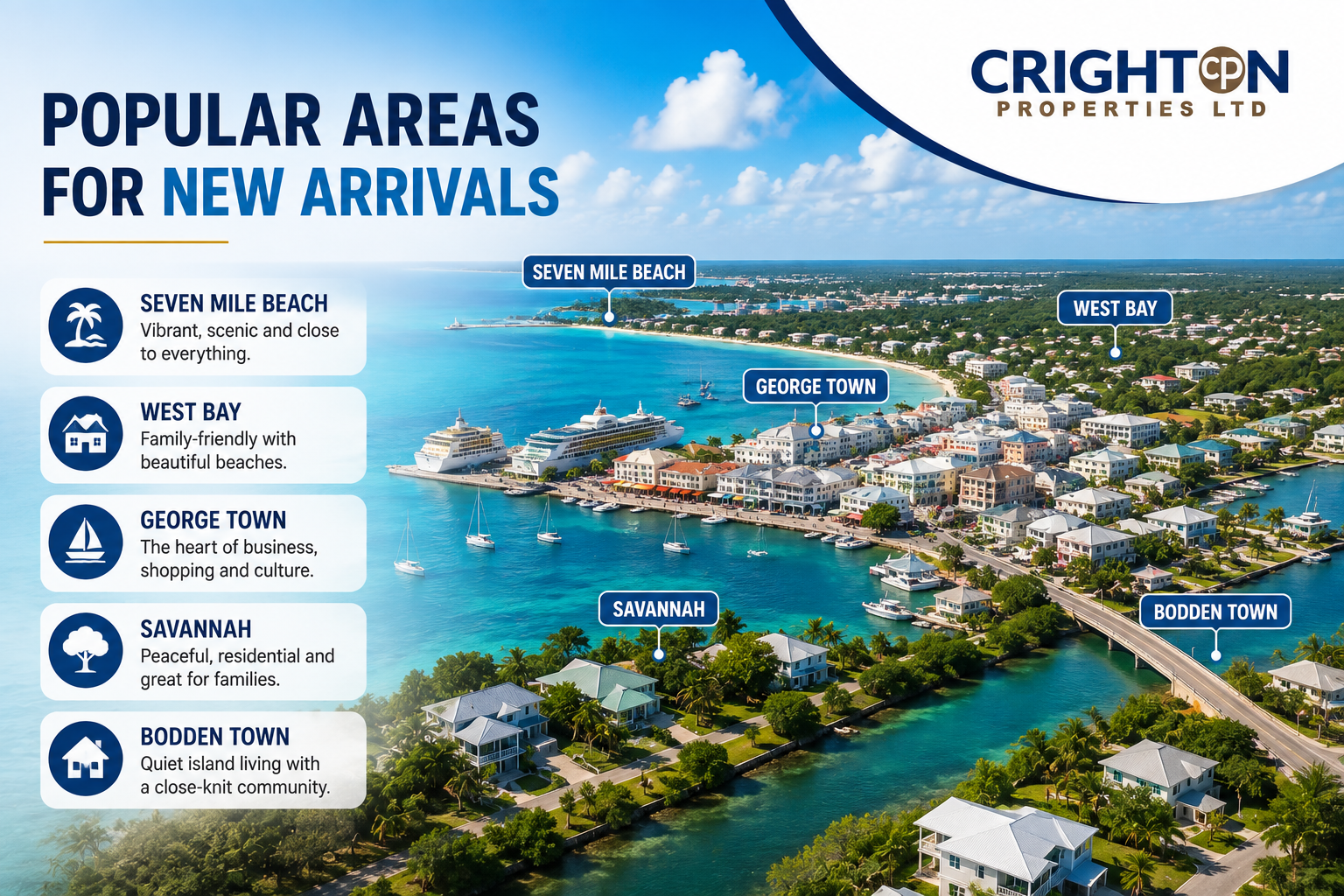
Whether you're renting or looking at Cayman Islands homes for sale, it's worth working with a licensed local agent who can walk you through property laws, negotiation norms, and neighbourhood trade-offs before you commit.
Before moving in, confirm the property is connected to CUC (electricity), FLOW or Digicel (internet/phone), and the Water Authority Cayman (water) — these are set up separately from the lease.
There's no income tax, but daily costs run higher than in most of the US and Europe because the vast majority of goods are imported. Here's a realistic snapshot:
Category | What to Expect | Why |
| Groceries | Noticeably Higher than the US Mainland | Most Food is Imported |
| Import Duty | 22–27% on Most Imported Goods | Primary Government Revenue Source in Place of Income Tax |
| Property Stamp Duty | 7.5% One-time Fee on Most Property Purchases | Paid at Transfer of Title |
| Rent (Seven Mile Beach area) | Premium Pricing, Limited Supply | High Demand, Constrained Inventory |
| Income Tax | None | Cayman has no Direct Income Tax |
| Property Tax (annual) | None | No Recurring Property Tax |
Healthcare in Grand Cayman is high-quality, with three hospitals on Grand Cayman and one on Cayman Brac, plus modern private clinics. Health insurance is mandatory for every resident by law.
If you're relocating with children, schooling is one of the first things to arrange most work permits require proof of school enrollment for dependents. Note that expatriate children are generally not eligible for government schools, so most expat families enroll in private or international schools.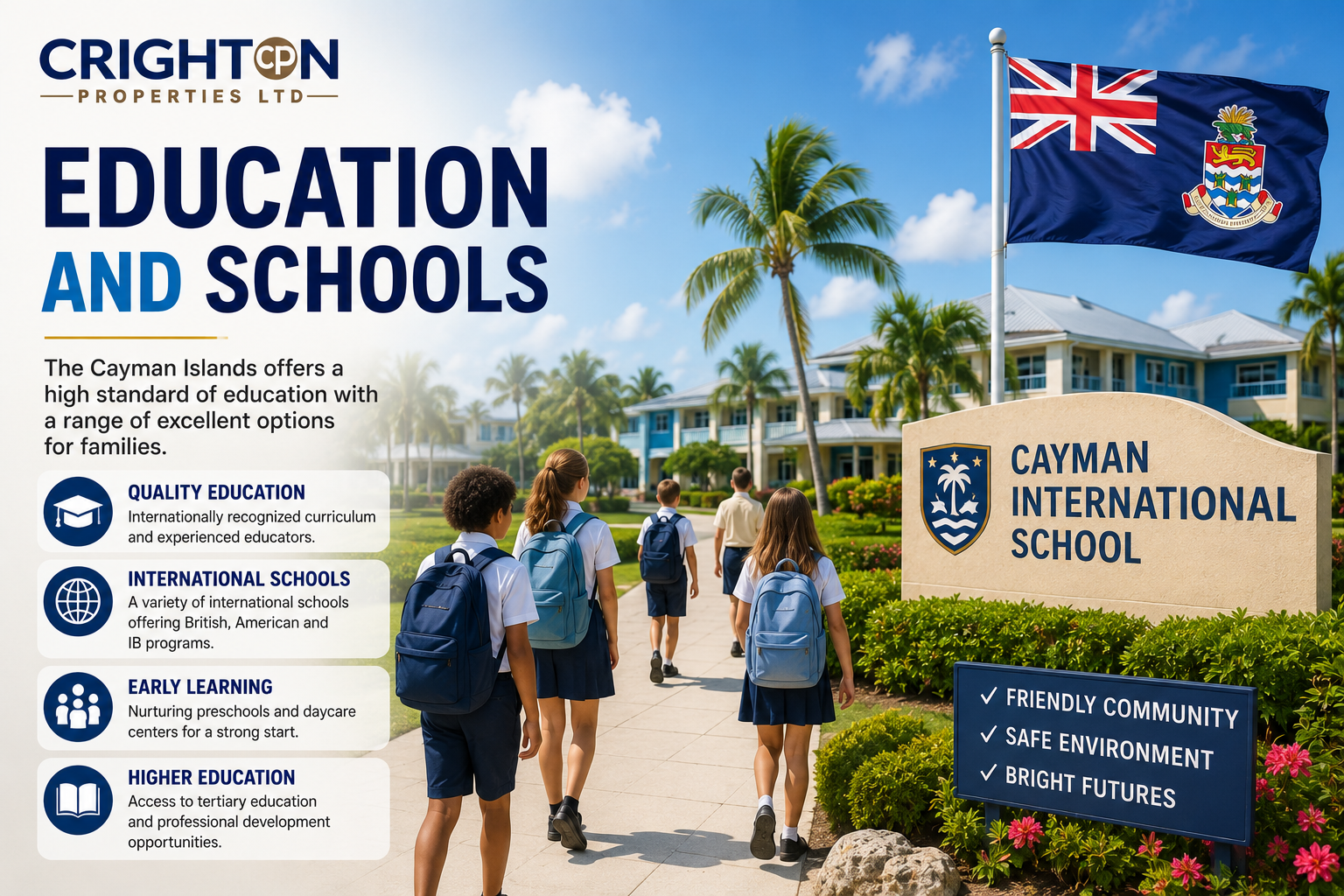
Set up a local bank account as soon as possible after arrival — employers, landlords, and utility providers will typically require one. Common banks include RBC, Butterfield Bank, CIBC FirstCaribbean, Scotiabank, and Cayman National Bank.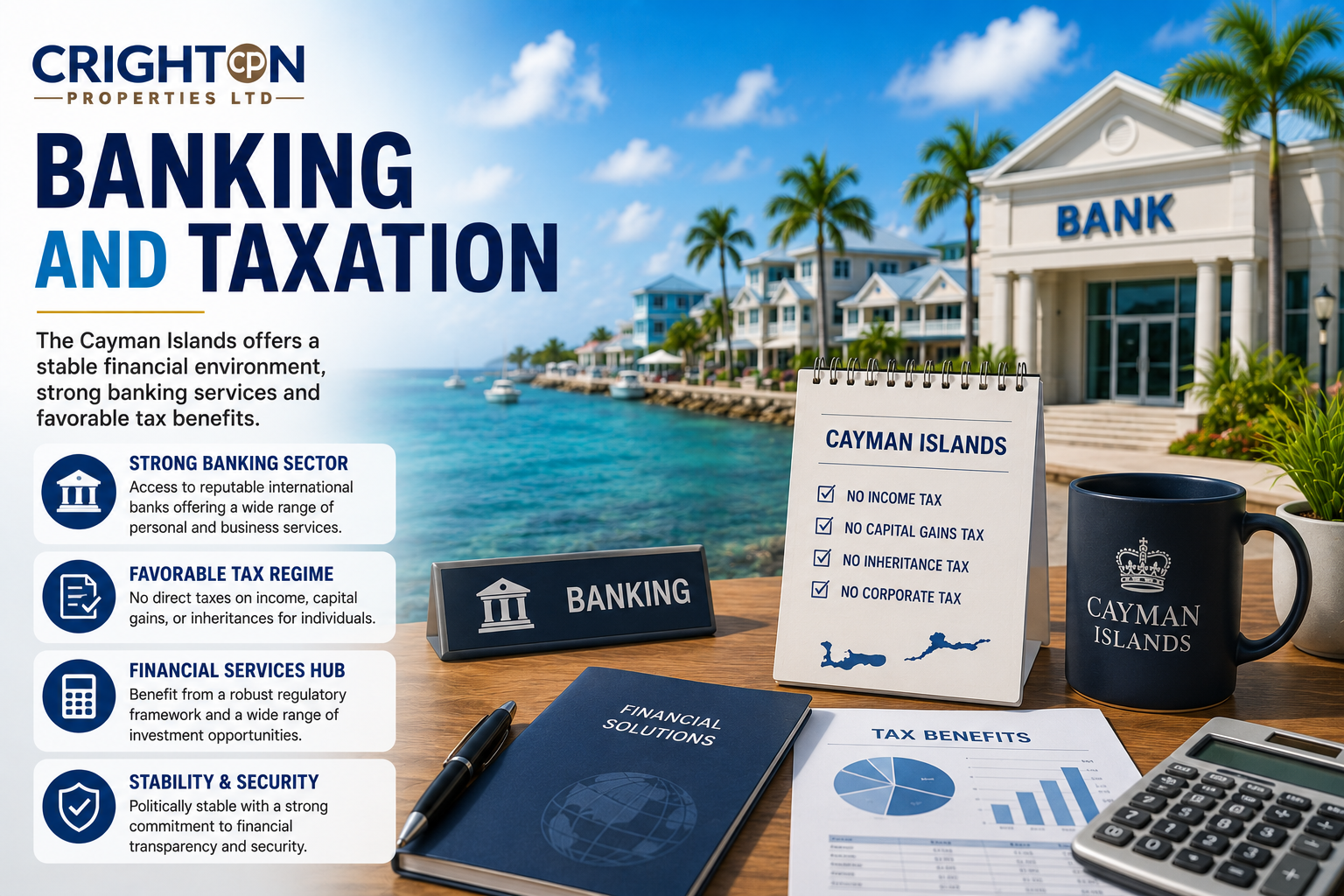
Public transport is limited, so most residents buy or lease a vehicle. Driving is on the left. A valid international driver's license can typically be converted to a Cayman Islands license, but every new resident must pass a local driving test first. The Road Code booklet is worth studying in advance since the test has a reputation for being thorough.
Cayman has a large, multicultural expat community, and public events, social clubs, and sports leagues make it relatively easy to build a social circle quickly. The climate is warm and sunny year-round, with a hurricane season running roughly June through November. Home insurance and a basic storm-prep plan are worth arranging as soon as you're settled.
Decide early whether to ship furniture and belongings or buy locally once you arrive; shipping costs and import duties can add up quickly for larger household moves. Cayman allows duty-free import of personal effects for individuals who've been a permanent resident elsewhere and are relocating for at least a year, provided items are imported within six months of taking up residence. New items and vehicles are typically not included in this exemption.
Relocation guides can tell you what to expect, but finding the right property once you've decided to move is where local expertise matters most. As a founding CIREBA member, Crighton Properties gives relocating clients access to the full Multiple Listing System, honest guidance on neighborhoods that fit your lifestyle and budget, and support that continues after closing, from insurance and utility setup to renovations and rental management.
Moving to the Cayman Islands is a major life change, but with the right preparation on visas, housing, cost of living, healthcare, and education, the transition can be smooth and genuinely exciting. Whether you're relocating for work, a lifestyle change, or retirement, understanding these practical details up front and working with people who know the island makes all the difference.
The dry season, roughly November through April, offers cooler and less humid weather and avoids hurricane season (June–November). It's also peak tourist season, so movers, schools, and services can be busier; book relocation services early if targeting this window.
Yes. Pets need an import permit, rabies vaccination, microchipping, and a rabies titer test. Some breeds may be restricted, so check current requirements with the Department of Agriculture well before travel.
Costs vary widely by household size and shipping needs, but expect a one-time stamp duty of about 7.5% if buying property, import duties of roughly 22–27% on most shipped goods, plus rental deposits typically equal to one to two months' rent. Housing is usually the largest single relocation cost.
Yes, health insurance is mandatory by law for every resident, and employers are required to provide coverage for employees.
Yes. Companies such as NCI Freight & Logistics, Navigate Cayman Islands, and IRC specialize in Cayman relocations and can help with shipping, customs clearance, and settling-in services.
Learn why professional property management is essential for maintaining property value, reducing risks, and achieving long-term investment goals.
Explore Cayman seasonal real estate trends and learn how market timing, buyer demand, inventory, and local conditions can influence when to buy, sell, or invest.
Discover how smart home technology is changing buyer expectations, from enhanced security and energy efficiency to convenience, connectivity, and modern living.
